 For a free consultation:


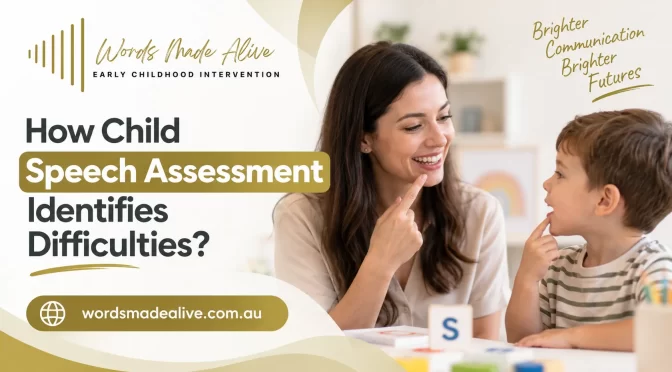
When communication does not come easily, it can be difficult for parents to know whether their child simply needs more time or extra support. A child speech assessment can offer helpful insight into how a child communicates and where difficulties may be present. As an NDIS provider, Words Made Alive can help families understand the process, explore suitable support and take the next step with confidence.
Why Does Speech Assessment Matters?
A speech assessment looks beyond pronunciation, exploring language, understanding, vocabulary, sentences and social communication. With early childhood speech therapy Pascoe Vale, families can gain clearer insights into specific communication needs and appropriate support.
What Happens During An Assessment?
Children communicate differently, so we avoid treating every assessment the same way. We may use conversation, observation and play-based activities to understand communication naturally. Parents also share valuable examples from home, childcare or preschool to complete the picture.
Communication Difficulties An Assessment Can Highlight
A child speech assessment can uncover challenges with speech sounds, understanding, vocabulary, sentences or social communication. Words Made Alive provides early childhood speech therapy Moonee Ponds, helping families understand their child’s needs and explore suitable support.
How Assessment Findings Guide Support
Assessment findings give us a practical starting point for therapy. Rather than choosing broad goals, we can focus on meaningful skills such as requesting help, following instructions, speaking clearly or joining conversations. This makes intervention more relevant to everyday family life.
Why Early Support Can Make A Difference?
Early support can give children opportunities to strengthen communication skills while they are still developing rapidly. Families exploring early childhood speech therapy Niddrie may benefit from discussing concerns early rather than waiting for difficulties to become more noticeable.
Understanding The Role Of A Speech Pathologist
A qualified clinician can assess your child’s communication and explain suitable support options. Words Made Alive focuses on personalised goals, family involvement and practical strategies, while a speech pathologist can help families understand the next steps.
Making The Next Decision
If you have concerns about your child’s communication, note specific examples from everyday situations rather than attempting to diagnose them. Families exploring early childhood speech therapy Flemington can share these observations with a qualified professional for clearer guidance.
Final Statement
Every child develops communication skills at their own pace, but persistent concerns deserve attention. A child speech assessment can turn uncertainty into a clearer understanding of your child’s strengths and needs. If you are ready to discuss your concerns, Words Made Alive can help you explore appropriate support options for your child.
Reach Out Now
Get in touch with us at 0481 580 352 or admin@wordsmadealive.com.au for further information and personalised support.
Frequently Asked Questions
At What Age Can A Child Have A Speech Assessment?
There is no fixed age to seek advice. If communication concerns persist, early childhood speech therapy Brunswick East can provide professional guidance and help families understand suitable support options.
Who Can Request An NDIS Speech Assessment?
Parents and carers can seek an assessment when they have concerns about a child’s communication. Other professionals involved in the child’s development may also recommend an assessment where appropriate.
Does An Assessment Feel Stressful For Children?
It does not have to be. We aim to make children feel comfortable and engaged by using age-appropriate activities. Some children respond better through play and conversation, so the approach can be adjusted accordingly.
Can Parents Stay During The Assessment?
Parent involvement can be very helpful. You understand your child’s everyday communication better than anyone, so your observations can provide useful information. Depending on the assessment, you may be able to participate or discuss your concerns with the clinician.
What Should Parents Bring To An Assessment?
Bringing previous reports, relevant NDIS information and notes about your concerns can be useful. You might also write down examples of situations where your child finds communication difficult, whether at home, childcare or preschool.
Can A Speech Assessment Identify Strengths Too?
Absolutely. An assessment is not simply about finding problems. We also look at what your child does well. Understanding these strengths helps us build practical strategies around existing abilities and encourage further communication development.
Will My Child Need Ongoing Speech Therapy Moonee Ponds?
Not every child needs ongoing sessions. Recommendations depend on the individual assessment and your child’s needs. In some situations, practical strategies, monitoring or occasional support may be appropriate instead of regular therapy.
How Long Does A Child Speech Assessment Take?
The length can vary depending on your child’s age, communication abilities and the type of assessment required. The clinician can explain what to expect beforehand, including how much time may be needed for discussion with parents.
Can Speech Difficulties Affect Classroom Participation?
Communication difficulties can affect classroom participation. A speech pathologist Moonee Ponds can help children develop skills for answering questions, following instructions, joining group activities and interacting more confidently with classmates.
Can An Assessment Help With Social Communication?
Yes. Social communication can be explored as part of an assessment. This may include looking at how a child takes turns, responds to others, starts interactions and uses communication during everyday social situations.
Is A Speech Assessment The Same As A Language Assessment?
Not exactly. Speech generally relates to producing sounds and being understood, while language involves understanding and using words, sentences and meaning. Depending on your concerns, an assessment may consider both areas.
Can Parents Prepare Their Child Before The Appointment?
Keep preparation relaxed and positive. You can tell your child they will meet someone who wants to talk and play with them. Avoid asking them to practise answers beforehand, as natural communication often provides more useful information.
Can Communication Difficulties Change Over Time?
Yes, communication can develop considerably as children grow. Their needs may also change as they move into new environments such as preschool or school. Keeping track of progress can help families recognise when additional support may be useful.
Can An Assessment Support Communication At Home?
Assessment recommendations can become part of everyday routines. With speech pathology Moonee Ponds, families can support communication through reading, play, mealtimes, conversations and encouraging children to make choices.
How Can Families Find The Right Speech Service?
Look for a service that takes time to understand your child’s individual needs and communicates openly with your family. It is also worth asking about the assessment.


